
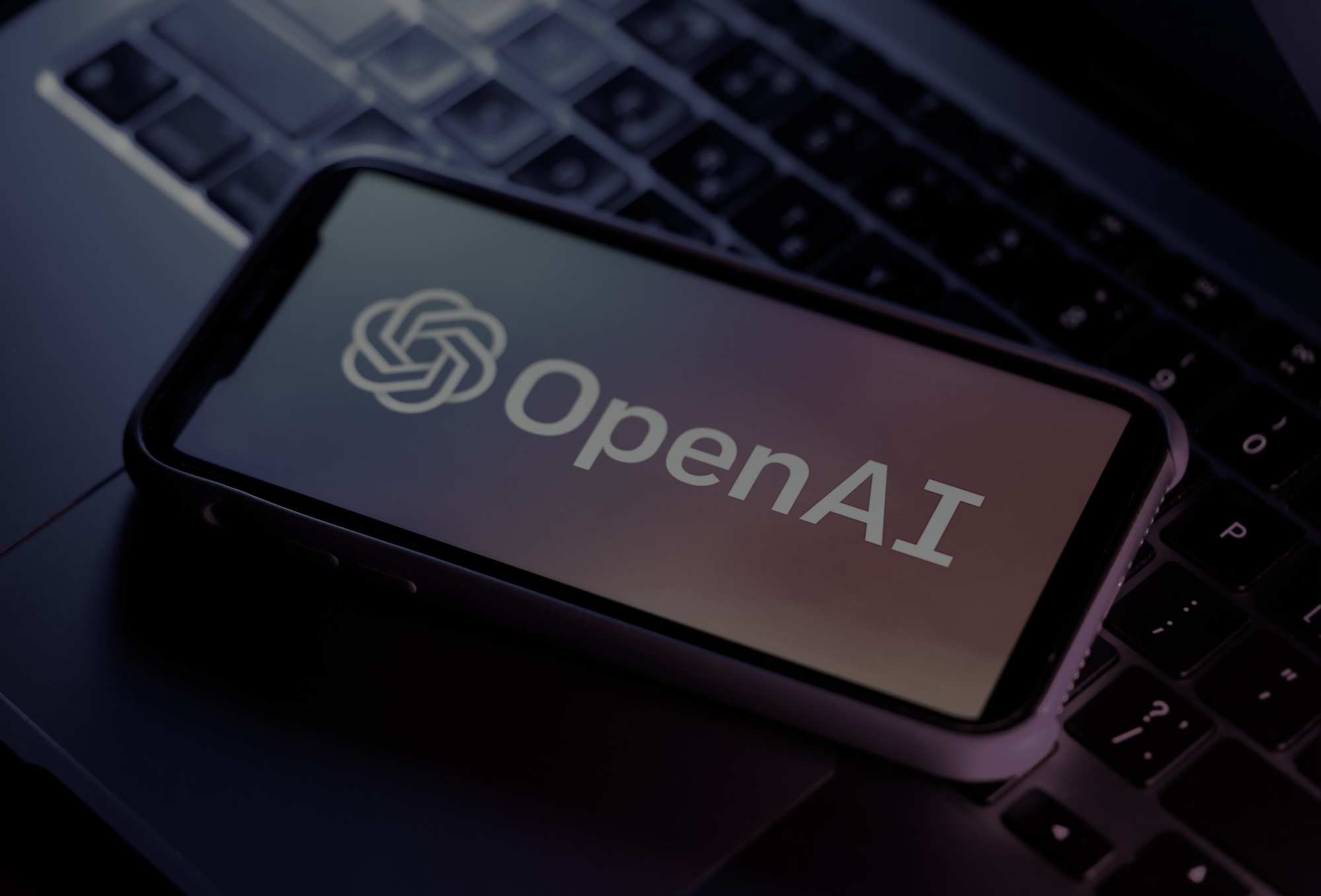
Advertising Inside ChatGPT
Your customers have stopped searching and started asking. Propellant Media places your brand inside those conversations — in front of people actively describing a problem you solve, at the moment they are describing it.
Available now for B2B and B2C advertisers. Clicks currently range from $1 to $10, with a monthly minimum of $1,500.
Book A ChatGPT Advertising Demo With Our Team
On the call we cover whether your category is a fit, what clicks are actually costing right now, what creative and landing pages we need from you, and how we measure results against the rest of your media.
You’d Be In Great Hands. These Clients Are









Search Didn’t Disappear. It Changed Shape.
For twenty years, buying intent showed up as a keyword. Someone typed three words into a box and you bid on them.
That behavior is shifting. People now describe the whole problem in a paragraph — budget, constraints, what they have already tried, what they are worried about — and ask for a recommendation. They are not searching. They are consulting.
That conversation is richer than any keyword ever was. It contains the context a media buyer normally spends months inferring. Advertising inside ChatGPT puts your brand into that moment, while the person is still deciding what to do rather than comparing ten blue links after they have already decided.
The practical argument is simpler still. Every channel is cheapest before everyone arrives. Paid search was cheap in 2005. Facebook was cheap in 2013. OTT was cheap in 2019. Clicks here currently run $1 to $10, and that number exists because the auction is young, not because the audience is low quality.
How Targeting Actually Works Here
This does not work like a DSP, and pretending otherwise would set the wrong expectation. You are not layering twenty behavioral segments. You are describing who you want to reach, in plain language, and letting the model match that against the conversations people are actually having.
What you give us:
- A description of your audience — who they are, what they care about, what problem brings them to you, what they are weighing up
- The keywords and topics that matter to your business, in the language your buyers use rather than the language your industry uses
- Context on who you want — and just as usefully, who you do not
Geographic targeting:
- State
- City
- Zip code
- Radius around a location
Why the description matters more than it sounds. The quality of a campaign here rests on how well you can articulate your buyer. Vague input produces vague reach. It is closer to briefing a good salesperson than configuring an ad platform, and the clients who do it well are the ones who already know exactly who their best customer is.
Who This Works For
This is not a fit for every advertiser, and we would rather say so before you spend.
Strong fit — B2B:
- Considered purchases with a research phase — software, professional services, equipment, healthcare services
- Categories where buyers ask “which vendor should I use for X” rather than searching a brand name
- Long sales cycles where being present during research matters more than capturing a click today
Strong fit — B2C:
- Higher-consideration consumer purchases — home services, automotive, education, health, financial products
- Categories where people ask for comparisons and recommendations before buying
Weaker fit:
- Pure impulse or commodity purchases with no research step
- Hyper-local businesses with very small addressable audiences, where geofencing will do more per dollar
- Anyone who needs this to be their only channel — it belongs inside an omnichannel plan, not instead of one
Measurement Is The Part Most Agencies Will Skip
A new channel is easy to sell and hard to prove. We treat proof as the point.
ChatGPT advertising gets reported as its own line item inside the same analytics dashboard as your search, social, programmatic and OTT campaigns — not in a separate deck designed to make it look good.
- Conversion tracking from day one — tagging and conversion setup handled through tag management before launch, so attribution is in place from the first click rather than added later.
- Phone calls attributed — call tracking ties inbound calls back to the channel that produced them, which matters because higher-consideration buyers call.
- Compared against your other channels — the only question worth answering is whether this produces customers at a better cost than what you are already running. We report it that way.
And we will tell you when it is not working. A channel this new deserves a defined test window and an honest read at the end of it.
How We Launch A ChatGPT Advertising Campaign
1
Category Fit Review
We look at whether your buyers actually research this way, what they would be asking, and whether the economics work at current click costs. If the answer is no, we say so.
2
Audience & Geography
We work with you to describe your buyer properly, pull the keywords and topics that matter, and set the geographic footprint by state, city, zip or radius.
3
Tracking & Creative
Conversion tracking and call tracking go in before launch, and we build the creative and landing page so the test produces a readable answer rather than a guess.
4
Launch & Test Window
Campaigns launch against a defined budget and a defined window, with a stated benchmark for what success looks like agreed before we start.
5
Read & Decide
At the end of the window we compare cost per outcome against your other channels and make a recommendation: scale, adjust, or stop.


What These Campaigns Do And Do Not Tell You
We have live ChatGPT campaigns running, and we would rather show you exactly what they prove than let two good-looking numbers imply more than they do.
What we can show today:
- A Midwest criminal defense firm reaching OWI defendants at an $8 cost per click.
- A Southeast public university reaching graduate program prospects at a $3 cost per click.
That spread is useful. It tells you a competitive legal category and a higher education category both clear, and it gives you a realistic planning number rather than the wide $1 to $10 band the market quotes.
What it does not tell you yet. These are delivery metrics — impressions and cost per click. They are not conversion data. We are still building the outcome picture on both campaigns, and until we have it, nobody can honestly tell you what a signed case or an enrolled student costs on this channel.
That is precisely why we set up conversion tracking before launch and run against a defined test window. When the outcome numbers exist, they will appear here.
Frequently Asked Questions About ChatGPT Advertising
What does it cost?
The market range is $1 to $10 per click depending on category and competition. On our own live campaigns to date, clicks have landed between $3 and $8 — roughly $8 in a competitive legal category and $3 in higher education. We will give you a realistic range for your specific category on the call rather than quoting an average that applies to nobody.
What is the monthly minimum spend?
$1,500 a month. At the $3 to $8 cost per click we are seeing in live campaigns, that buys roughly 190 to 500 clicks in a month — enough volume to read a real signal rather than a sample too small to conclude anything from. Below that threshold you would be paying for a test that cannot answer the question you are asking.
What targeting controls do we have?
Targeting here is descriptive rather than the segment-stacking you would do in a DSP. You define your audience in plain language — who they are, what they care about, what problem brings them to you — along with the keywords and topics that matter to your business and who you want to reach.
Geographically you can target by state, city, zip code, or a radius around a location, so national brands and single-location businesses can both run it sensibly.
The practical consequence is that campaign quality depends heavily on how well you can articulate your buyer. Vague input produces vague reach. We spend real time on this in onboarding, because it is the lever that matters most on this channel.
What creative specs do you need from us?
At minimum: your brand logo, a short headline and description, the destination URL you want traffic sent to, and any imagery you want used. We confirm the exact format requirements with you before the build, since specs on a channel this new do change, and we would rather send you a current list than have you produce assets twice.
If you do not have assets ready, our creative team produces them. The part worth spending time on is not the image — it is the message. Someone reaching you from a research conversation is earlier in the decision than someone clicking a search ad, so copy that leads with a hard offer tends to underperform copy that answers the question they were actually asking.
Do you have results that prove this converts?
Not yet, and we will not pretend otherwise. We have live campaigns delivering impressions and clicks at $3 to $8, which tells you the channel reaches people and what that reach costs. Conversion data is still building on those accounts.
That is the honest state of a channel this young. It is why we install conversion tracking before launch, agree a benchmark up front, and read the result at the end of a defined window rather than asking you to keep spending on faith.
How is this different from Google Ads?
Google captures a keyword typed by someone who has already framed their problem into a few words. This reaches someone describing the whole problem in context, usually earlier in the decision. The two are complementary rather than competing, and most advertisers should keep running paid search alongside it.
Does this work for B2B, or only consumer brands?
Both. B2B is arguably the stronger case, because business buyers research heavily before contacting a vendor and increasingly do that research conversationally rather than through search. Consumer categories with a real consideration phase also perform; impulse purchases do not.
How do you measure it?
Conversion tracking and call tracking are configured before launch, and performance is reported inside the same dashboard as your search, social, programmatic and OTT campaigns. The comparison that matters is cost per outcome against your existing channels.
Can agencies white label this?
Yes. This is available through our white label partner program the same way our other channels are, with campaigns and reporting delivered under your brand. For agencies, being first to bring this to clients is worth more than the margin on it.
What do you need from us to launch?
A clear picture of who you are trying to reach, the landing page or destination you want traffic sent to, and access to place conversion tracking. Our team can produce the creative and build or optimize the landing page if you do not have one ready.
Every channel is cheapest before everyone arrives.
Paid search was cheap in 2005. Facebook was cheap in 2013. OTT was cheap in 2019. On our live ChatGPT campaigns, clicks are running $3 to $8.
Minimum spend is $1,500 a month. We will tell you honestly whether your category is a fit, what a realistic test looks like, and how we will measure whether it worked.
Fill out the contact form or call us at 1 (877) 776-7358.