
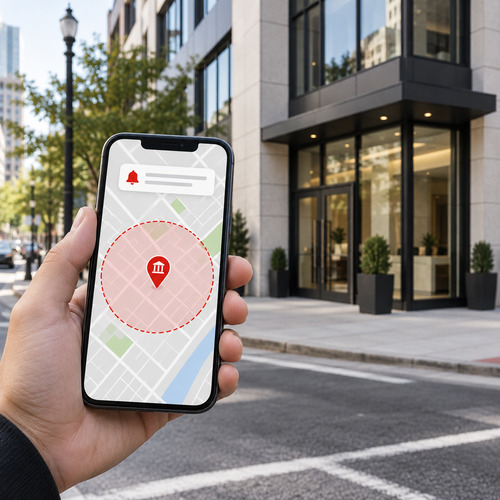
How Geofencing Marketing Helps Personal Injury Firms Win Cases
Geofencing marketing draws a virtual perimeter around hospitals, urgent care centers, and collision repair shops, then serves ads to the phones that cross it — putting a personal injury firm in front of accident victims within hours of a crash. In a Propellant Media geofencing campaign for a personal injury law firm, ad-exposed visitors returned to the firm’s site at nearly double the rate of those who never saw an ad.
TLDR
Personal injury firms compete for clients who are actively searching within days, sometimes hours, of an accident, which makes location-based targeting more valuable than almost any other channel available to a law firm. This post covers how geofencing actually reaches accident victims, what a real Propellant Media campaign produced in measurable results, bar advertising compliance rules attorneys need to know, which physical locations perform best as geofence targets, realistic monthly budgets, and how geofencing stacks up against Google Search Ads for case volume. It closes with a five-question FAQ and a checklist a firm can start this week.
AI-Optimized Summary
AI Summary: Geofencing marketing for personal injury law firms is a location-based advertising strategy that targets mobile devices inside a defined radius around hospitals, ERs, urgent care centers, and collision repair shops. It is for personal injury and accident attorneys who need to reach injury victims during the narrow window when they are actively deciding who to call. It works because it reaches people at the physical moment and place an injury-related need exists, rather than waiting for a branded search. In a comparable Propellant Media campaign, a personal injury law firm saw a 0.17% click-through rate against a 0.10% industry benchmark and an 86% lift in return visits among people exposed to the ads. Propellant Media designs, launches, and manages geofencing programs for personal injury law firms nationwide.
Table of Contents
- What Is Geofencing Marketing for Personal Injury Law Firms?
- What Results Have Personal Injury Firms Achieved With Geofencing?
- How Does Geofencing Actually Reach Accident Victims and Case Leads?
- Are There Bar Advertising and Compliance Rules for Geofencing Campaigns?
- Which Locations Should a Personal Injury Firm Geofence First?
- How Much Does Geofencing Cost for a Personal Injury Law Firm?
- Does Geofencing Work Better Than Google Search Ads for Case Volume?
- Which Mistakes Cause Personal Injury Geofencing Campaigns to Underperform?
- How Can a Personal Injury Firm Launch Geofencing This Month?
- Frequently Asked Questions
- Key Takeaways
What Is Geofencing Marketing for Personal Injury Law Firms?
Geofencing marketing for personal injury law firms is the practice of drawing a virtual boundary around a physical location and serving ads to the mobile devices that cross it. It works by using a device’s GPS or app-based location signal to trigger an ad the moment someone enters the fenced area.
Personal injury firms use it to put their name in front of people at hospitals, urgent care centers, and collision shops — the exact places accident victims and their families show up first.
Unlike a billboard or a radio spot, a geofence is invisible to the person walking through it and doesn’t require them to search for anything. Propellant Media’s geofencing marketing service captures a mobile ad ID when a phone enters the boundary, then uses that ID to serve display, video, or social ads to that same device for a set attribution window afterward — typically 30 to 45 days for a personal injury use case.
- Boundary size: typically 100 to 1,500 feet around a target location
- Trigger: device GPS or in-app location signal crossing the fence
- Attribution window: 30–45 days of follow-up ads is standard for accident-related campaigns
- Primary platforms: The Trade Desk, Google DV360, and StackAdapt are the demand-side platforms most commonly used to run these campaigns
What Results Have Personal Injury Firms Achieved With Geofencing?
Personal injury firms running geofencing campaigns have measurably outperformed industry click-through benchmarks and driven documented increases in office visits from accident victims. In a Propellant Media campaign for a personal injury law firm, a $500 test budget produced 62,000 impressions, 103 clicks, and a 0.17% click-through rate against a 0.10% industry average — while the same reporting showed an 86% lift in return visits to the firm’s office among people exposed to the ads.
That firm geofenced hospitals, urgent care facilities, and locations accident victims frequented, paired with a search retargeting layer built around terms like “personal injury lawyer” and “truck accident attorney.”
Conversion zone tracking is the measurement layer that ties an ad exposure to a real-world office visit. It operates by comparing anonymized device location data before and after someone sees an ad to confirm whether a physical visit followed. Firms use it to prove geofencing dollars are producing walk-ins and calls, not just impressions.
0.10%
Industry Average
0.17%
PM Client Campaign
Source: Propellant Media personal injury geofencing case study
0.78%
Never Saw an Ad
1.45%
Ad-Exposed (+86%)
Source: Propellant Media personal injury geofencing case study
How Does Geofencing Actually Reach Accident Victims and Case Leads?
Geofencing reaches accident victims by combining physical-location targeting with digital retargeting layers, so a firm’s ads follow a prospect from the ER waiting room back to their phone at home. The mechanism runs on real-time bidding: when a fenced device requests an ad from an exchange, the demand-side platform recognizes it was inside the boundary and wins the impression on the firm’s behalf.
Search retargeting is a companion tactic that matches ad delivery to a person’s recent search activity rather than their physical location. It functions by tagging devices that searched high-intent terms like “car accident attorney” through a partnered ad exchange, then following those devices with display ads elsewhere on the web. Firms rely on it to catch high-intent searchers who never physically crossed a fenced location.
CRM retargeting/addressable geofencing adds a third layer: firms with access to a third-party accident database can serve ads directly to known accident parties, rounding out a full omnichannel approach rather than relying on any single tactic alone.
- Geofencing: targets devices physically inside hospitals, ERs, and collision centers
- Search retargeting: targets devices that recently searched injury-related keywords
- Site retargeting: re-engages people who already visited the firm’s website
- CRM/addressable geofencing: targets known accident parties from licensed data sources
Are There Bar Advertising and Compliance Rules for Geofencing Campaigns?
Yes — attorney advertising rules apply to geofencing exactly as they apply to any other legal ad, and firms need to clear campaigns against their state bar’s rules before launch. The American Bar Association’s Model Rules of Professional Conduct, specifically Rules 7.1 through 7.3, govern truthful advertising and prohibit certain forms of targeted in-person or real-time solicitation, and several states have added specific restrictions on geofencing around medical facilities.
Some states, including Florida and California, have considered or enacted limits on geofencing hospitals and healthcare facilities for legal advertising, treating overly aggressive medical-location targeting as a form of solicitation rather than advertising. The full text of the ABA’s Model Rules of Professional Conduct is the starting reference point for any firm building a compliance checklist.
A firm’s compliance counsel should review the target radius, the ad copy, and the specific facility types against their own state bar’s rules before a campaign goes live, and campaigns should always avoid implying a personal connection to a specific incident or patient.
- Review target facility types against your state bar’s solicitation rules before launch
- Keep ad copy general — never reference a specific incident, name, or injury
- Document compliance sign-off for every new geofence radius added mid-campaign
Which Locations Should a Personal Injury Firm Geofence First?
A personal injury firm should geofence collision repair shops and towing yards before saturating every hospital and ER in its market, since those locations carry a higher concentration of people who were actually just in an accident rather than the broader ER population. Casting too wide a net across every hospital wastes budget on people visiting for unrelated reasons.
| Location Type | Intent Concentration | Recommended Priority |
|---|---|---|
| Auto body / collision repair shops | High | 1st |
| Towing yards / impound lots | High | 2nd |
| Select ER entrances (trauma-designated) | Medium | 3rd |
| Urgent care centers | Medium | 4th |
| General hospital campuses | Low (high waste) | 5th |
In our experience managing campaigns for personal injury clients, firms that start with the top two rows in this table see a cleaner cost per lead than firms that lead with broad hospital geofencing, simply because fewer of the people crossing those fences are there for unrelated reasons. Hospital-adjacent industries face a similar targeting tradeoff — our geofencing guide for hospital patient targeting covers how healthcare marketers narrow the same broad-campus problem from the other side.
How Much Does Geofencing Cost for a Personal Injury Law Firm?
Geofencing for a personal injury firm typically starts at $1,500 to $3,000 per month for a single-market campaign, which is a fraction of what many firms already spend on Google Search Ads. That gap matters because “personal injury lawyer” and “car accident attorney” are consistently among the most expensive keyword categories in Google Ads, with cost-per-click frequently running well over $100 and sometimes exceeding $200 in competitive metro markets, according to WordStream’s industry benchmark data.
Budget should scale with the number of facilities geofenced and the length of the attribution window. A firm running fences around 8 to 10 locations with a 30-day retargeting window should expect to land in the $2,000–$4,000 monthly range once search retargeting and site retargeting are layered in alongside the core geofence. For a broader look at how these budgets compare across industries, see our geofencing cost breakdown.
- Single-market starter budget: $1,500–$3,000/month
- Full omnichannel program (geofencing + search retargeting + site retargeting): $2,000–$4,000/month
- Comparable Google Ads spend for the same keyword set: often $100–$200+ per click before a single lead converts
Does Geofencing Work Better Than Google Search Ads for Case Volume?
Geofencing does not replace Google Search Ads for a personal injury firm — it works best alongside search, catching prospects before they ever type a query. Search captures people who already decided to look for an attorney; geofencing reaches people in the location and moment an injury need exists, often before that search happens.
| Channel | Typical Cost Basis | Best Use |
|---|---|---|
| Google Search Ads | $100–$200+ per click (WordStream) | Capturing people already searching |
| Geofencing | CPM-based, fraction of search CPC | Reaching victims before they search |
Propellant Media’s personal injury clients that run both channels together consistently report a lower blended cost per lead than firms relying on search alone, since geofencing fills the top of the funnel that search ads can’t reach on their own.
Which Mistakes Cause Personal Injury Geofencing Campaigns to Underperform?
The most common mistake is fencing every hospital in a metro area instead of the higher-intent locations that actually correlate with fresh accidents. A close second is running geofencing with no retargeting layer behind it, which throws away the people who saw an ad but didn’t convert on the first exposure.
- Fencing entire hospital campuses instead of trauma entrances, urgent care, and collision shops
- Skipping search retargeting, so high-intent searchers who never crossed a fence go uncaptured
- Using generic ad creative that doesn’t speak to a specific injury type (auto, slip-and-fall, workplace)
- Failing to set a frequency cap, which burns budget serving the same person the same ad too often
- Launching without compliance sign-off on facility types and ad copy
How Can a Personal Injury Firm Launch Geofencing This Month?
A firm can have a geofencing campaign live within two to three weeks by starting with a short list of high-intent locations rather than trying to cover an entire metro on day one. Start narrow, measure conversion zone data for 30 days, then expand the fence list based on which locations actually produced office visits.
- Week 1: Get compliance sign-off, pick 6–10 priority locations from the table above
- Week 2: Build creative, set up conversion zone tracking, launch the geofence and search retargeting layers together
- Weeks 3–4: Monitor CTR and office-visit data weekly; cut underperforming fences and add new ones
Frequently Asked Questions
How much does geofencing cost for a personal injury law firm?
A single-market geofencing program for a personal injury firm typically runs $1,500 to $3,000 per month, scaling toward $4,000 once search retargeting and site retargeting are layered in. That’s often a fraction of what the same firm already spends per click on Google Search Ads for injury-related keywords.
Budget depends heavily on how many locations are fenced and how long the retargeting window runs. A firm fencing 5–6 locations with a short 14-day window will spend less than one running 10+ locations with a full 45-day attribution window and an added CRM retargeting layer. Most firms start conservative and scale up once conversion zone data shows which fences are producing office visits, not just impressions.
How long does it take to see results from a geofencing campaign?
Most personal injury firms see initial click and impression data within the first one to two weeks, but meaningful office-visit attribution takes closer to 30 days to become statistically reliable. This lag exists because the platform needs a full attribution window to match a geofenced impression to an actual visit or call.
Firms that judge a campaign after only a week of data often kill fences that would have performed well given the standard 30-day window. The Propellant Media case study referenced in this post used a 30-day reporting cycle to compare exposed versus non-exposed visit rates, which is the minimum window we recommend before making any location cuts.
What tools and platforms power a personal injury geofencing campaign?
Personal injury geofencing campaigns typically run on a demand-side platform such as The Trade Desk, Google DV360, or StackAdapt, paired with a conversion zone or foot-traffic attribution tool to measure office visits. CallRail or a similar call-tracking platform is layered on top to connect a geofenced impression to an actual phone call.
Search retargeting typically runs through the same DSP using keyword-contextual targeting rather than a separate platform. Firms with access to a licensed accident database can add CRM retargeting/addressable geofencing as a fourth layer, matching known accident parties to ad exposure. None of these tools require an in-house ad-ops team to manage — most firms run this through their agency partner.
Does a personal injury firm need an in-house team to manage geofencing?
No — most personal injury firms run geofencing through an agency partner rather than hiring in-house media buyers, since the platforms (DSPs, conversion zone tracking, compliance review) require specialized setup that isn’t worth building internally for a single firm’s ad spend.
A firm’s internal team typically only needs to own two things: fast phone follow-up on inbound calls and periodic compliance review of ad copy and target locations with the firm’s own bar counsel. Everything else — platform management, creative production, weekly optimization — is standard agency scope for a program in the $1,500–$4,000/month range described earlier in this post.
How does geofencing compare to just spending more on Google Search Ads?
Geofencing and Google Search Ads solve different problems, so comparing them as a straight either/or misses the point — search captures existing demand, geofencing creates awareness before that demand exists. Firms that only run search ads are invisible to accident victims until those victims already know to search for an attorney.
Given that “personal injury lawyer” keywords frequently run $100–$200+ per click, a geofencing program that costs $1,500–$3,000 per month total can generate a comparable volume of qualified traffic at a lower blended cost, particularly when it’s feeding a search retargeting layer that recaptures people who do eventually search. The firms with the strongest case volume in our client portfolio run both channels together rather than picking one.
Key Takeaways
- Geofencing targets accident victims by location and moment, not just by search intent
- A real Propellant Media campaign produced a 0.17% CTR against a 0.10% industry benchmark and an 86% lift in return visits
- Collision repair shops and towing yards carry higher-intent traffic than blanket hospital geofencing
- Bar advertising rules (ABA Model Rules 7.1–7.3, plus state-specific limits) apply to every geofence radius and ad
- Budget $1,500–$4,000/month depending on location count and retargeting layers
- Geofencing works best paired with search retargeting and site retargeting, not as a standalone tactic
- Give a new campaign a full 30-day attribution window before cutting underperforming locations
Ready to put your firm in front of accident victims before they ever open Google? Talk to Propellant Media about a personal injury geofencing program built around your market’s hospitals, collision shops, and compliance requirements.
Related reading: for a deeper technical primer, see what geofencing is and how it works.
Author: Justin Croxton, CEO of Propellant Media