
Midwest Criminal Defense Firm Reaches OWI Defendants Inside ChatGPT At $8 Cost Per Click

A Midwest criminal defense firm built its practice on OWI and criminal defense work, and had already done what most firms in its position do: bought every channel a defendant searches on. Google Ads, Meta, programmatic display and geofencing were all live in its region, and all of them were saturated. Every added search dollar was buying the same click at a higher auction price.

The firm came to Propellant because we had been placing sponsored ads inside ChatGPT for a number of brands, and it wanted to be the first firm in its market to reach defendants there. The brief was not more visibility. It was a new place to be visible.

Criminal defense and OWI keywords sit among the most expensive categories in paid search. When a firm has already saturated that auction, the marginal dollar stops buying anything new. Meanwhile a growing share of people charged with OWI now ask an AI assistant what happens next before they ever type an attorney’s name into a search bar. No firm in the region was reaching them at that moment.

Channel state at brief
Google AdsSaturatedMetaSaturatedProgrammatic displaySaturatedGeofencingSaturatedChatGPT adsOpen

Four channels the firm already owned in its market, and the one nobody had claimed.

What Our Team Was Tasked With

Open a channel the firm’s competitors were not on, and prove it could put the firm in front of people researching a criminal charge in its service region, at a cost per click that justified running it beside search. Spend to date is just over $670 across the first seven weeks, Aug 1 through Sep 17, 2026, with the campaign ongoing.

Media Plan We Developed

  • ChatGPT advertising: A single sponsored campaign inside ChatGPT conversations, targeted by situation rather than demographics and confined to the firm’s service region within its state. It ran as an incremental layer beside the firm’s existing search program, not a replacement for it.

ChatGPT campaigns run on a written audience description and a keyword set, not bids. We wrote both from what the firm’s Google Ads account had already proven, so the new channel started from established intent instead of guesswork.

01
Google account
Converting terms and case types pulled from the firm’s search history
02
Audience description
Rewritten as a situation: arrested, cited, charged, researching
03
Keyword set
OWI, criminal charge and defense terms that had already converted
04
Regional geo
Service area only, inside one state
05
Placement in ChatGPT
Sponsored unit inside the conversation

The audience was defined by circumstance: recently arrested, cited for OWI, facing a criminal charge, researching defense options. The keyword set carried the OWI, criminal charge and defense terms that had already converted on search. The geography was the firm’s service area and nothing more, so every click was one the firm could actually retain.

Campaign Results

18,557
Impressions
Served inside ChatGPT conversations, regional geo only
85
Clicks
Every click from the firm’s service region
0.46%
Click-through rate
Situational targeting, no keyword auction
$7.99
Average CPC
On just over $670 in spend so far
Metric Aug 1 – Sep 17, 2026
Impressions 18,557
Clicks 85
Click-through rate 0.46%
Average cost per click $7.99
Spend to date $670+
Effective CPM ~$36

Single campaign, single channel. The platform reported reach and cost for this flight; no lead or case claim is made.

What the Data Settled

  • Context did the work. There is no keyword auction inside ChatGPT, so the 0.46% click-through rate came entirely from the situational audience description, written off what search had already proven.
  • $7.99 bought a click the auction could not. Every one of the 85 clicks came from the firm’s service region, from a person already working through what an OWI charge means, before they had searched for an attorney.
  • The cost to be in the room was about $36 per thousand. That is the effective CPM for placement inside the conversation a defendant has before they search, a slot no competitor in the region held.

What We Take to the Next Campaign

  1. Write the audience from what search already proved. The Google account is the research. Port its converting terms and case types into the ChatGPT description before spending a dollar.
  2. Keep the geo as tight as the retainer. A click outside the service area is a wasted $8. Regional targeting kept every click retainable.
  3. Instrument conversions before launch. This flight reported reach and cost only. The next one needs call and consultation tracking in place from day one, so the channel can be judged on cases, not clicks.

For a firm that had already bought every channel a defendant searches on, ChatGPT advertising opened the one they research on. Seven weeks in, it has put the firm in front of 18,557 conversations in its own region at $7.99 a click, and it is still running.

Frequently Asked Questions

How much does ChatGPT advertising cost for a law firm?

This criminal defense campaign averaged $7.99 per click on just over $670 in spend across its first seven weeks. Cost depends on how tightly the audience and geography are defined; a regional, situation-specific audience like this one keeps every click inside the firm’s service area, which is what makes the per-click figure worth paying.

How does targeting work inside ChatGPT ads?

There is no keyword auction. A campaign runs on a written audience description and a keyword set, and the ad surfaces inside conversations that match. For this firm we defined the audience by circumstance rather than demographics: recently arrested, cited for OWI, facing a criminal charge, researching defense options. Geography can be set by state, city, zip code or radius; this campaign ran inside the firm’s service region only.

What click-through rate can a criminal defense firm expect on ChatGPT ads?

This campaign returned a 0.46% click-through rate on 18,557 impressions, with 85 clicks in seven weeks. The rate came from the situational audience description, which was written directly from what the firm’s Google Ads account had already proven converts.

Should a law firm replace Google Ads with ChatGPT advertising?

No. This campaign ran as an incremental layer beside search, not a replacement for it. The value of the channel is that it reaches a defendant during the research conversation they have before they search for an attorney, a moment Google Ads cannot buy. The Google account is also the source material: its converting terms and case types are what the ChatGPT audience description was built from.

Did the campaign generate cases?

The platform reported reach and cost for this flight, so this case study makes no lead or case claim. The standing takeaway is to put call and consultation tracking in place before the first dollar of the next flight, so the channel can be judged on cases rather than clicks.

Arizona Statewide Primary Campaign Launches Five Channels in Five Weeks to Deliver 9.1M Impressions

A statewide primary campaign in Arizona came to our team with a compressed window, a four-way race, and opponents holding both the name recognition and the money. The campaign needed to be visible everywhere a primary voter looked — television, phone, desktop and the road — with roughly five weeks left on the calendar.

Name recognition was the core problem, and there was not enough time left to build it the slow way. A better-funded field was already on air. Concentrating the budget into one or two channels would only have bought more depth in the places the campaign was already losing. The brief came down to two things: saturation and speed.

What Our Team Was Tasked With

The objective was to put a low-recognition candidate in front of primary voters across every screen and surface they encountered, and to move fast enough that the media had time to work before ballots were returned. The campaign carried a $200,000 budget across a June 18 – July 21, 2026 flight — about five weeks, or roughly $40,000 per week — and had to hold statewide reach without giving up weight in Maricopa County, where the bulk of the primary electorate lives.

Media Plan We Developed

We launched five tactics inside the same window rather than phasing them in, building 10 line items across four creative formats:

  • Online Video: The message carrier and the largest share of delivery at 46.9%. Four cuts ran at :15, :30 and :60 against third-party audience segments.
  • Programmatic Display: Six static sizes built to generate clicks, running dual-geo against third-party audience segments.
  • DOOH: Physical presence in the corridors voters drive, across general, premium and zip-code inventory in three creative ratios.
  • OTT / CTV: Television-screen reach against third-party audience segments, carrying the long-form message.
  • Native: Keyword search and contextual retargeting — a second, intent-based route to the same voter, with with-disclaimer variants built in from the start so compliance never held up a launch.

Dual-geo structure. Every major tactic ran a parallel All-Arizona line and a Maricopa County line. That let us weight budget toward the population center without giving up statewide reach, and it kept the whole thing to one campaign build instead of two.

Format laddering. Each channel was assigned the job it is actually good at. OTT and online video carried the message, static display and native carried the clicks, and DOOH carried physical presence. Creative depth was built in every format up front — six static sizes, four video cuts, three DOOH ratios — so nothing waited on production once the flight opened.

Campaign Results

The campaign delivered 9,105,990 impressions in five weeks across five tactics, at a blended CPM of roughly $22.

Channel Impressions Clicks CTR Video Completion
Programmatic display 1,819,279 3,349 0.18%
Native 366,012 558 0.15%
Online video 4,271,480 1,544 0.04% 72.29%
OTT / CTV 1,244,715 98.02%
DOOH 1,404,504
Total 9,105,990 5,463 78.37%
How the 9.1M impressions splitShare of delivery
Online video 46.9%Display 20.0%DOOH 15.4%OTT / CTV 13.7%Native 4.0%

CTR is reported only on the channels built to generate clicks. Video, OTT and DOOH are reach and completion formats.

  • Total Impressions: 9,105,990 in five weeks across five tactics
  • Completed CTV Views: 1.21 million, at a 98.02% completion rate on OTT inventory
  • Display CTR: 0.18%, 80% above our 0.10% programmatic display benchmark
  • Blended CPM: ~$22, with the full $200,000 working across every channel
  • Share of Delivery: Online video 46.9% · Display 20.0% · DOOH 15.4% · OTT/CTV 13.7% · Native 4.0%

What the Data Settled

Shorter cuts held the viewerCompletion rate
Introduction
:15
86.3%
Small business
:30
71.7%
Issue contrast
:30
71.6%
Property tax
1:00
64.2%

All Arizona lines. The :15 beat the 1:00 by 22 points — for a low-recognition candidate, brevity won.

The 728×90 leaderboard carried the display program. It returned a 0.32% CTR on 347,800 impressions — 220% above benchmark — and it already held the largest static allocation, so the performance came at scale rather than in a small test cell.

Compliance costs nothing. The 600×600 native unit carrying its required disclaimer still returned a 0.29% CTR, with no measurable drop in engagement against the units that did not carry one.

What We Take to the Next Campaign

  1. Run the state and the dominant county as parallel lines. Reach and concentration come off one budget, with no second campaign build to maintain.
  2. Lead with a :15 when the candidate is unknown. Introduce first, argue second. The gap between the :15 and the :60 was wide enough to plan a rotation around.
  3. Be precise about what DOOH actually delivered. Most impressions landed on vertical and horizontal digital screens; true outdoor billboards accounted for 52,718. Naming that split is what makes the rest of the reporting credible.

The campaign proved that a five-channel program can be built, trafficked and delivered inside five weeks without the phased rollout that usually costs a late-starting candidate its first two weeks of exposure. Saturation across screens, priced at a ~$22 blended CPM, put a low-recognition candidate into the same rooms as a better-funded field — and the channel-level completion and click data gave the next campaign a rotation plan it did not have to guess at.

Frequently Asked Questions

What does a statewide political advertising campaign cost?

This one ran $200,000 across a five-week flight — roughly $40,000 per week — and delivered 9,105,990 impressions at a blended CPM of about $22. Budget scales with the size of the state and the length of the window, but the blended CPM is the number to hold steady: it tells you whether you are buying reach efficiently or paying a premium for a late start.

What is a good video completion rate for political CTV advertising?

This campaign returned 98.02% completion on OTT/CTV and 72.29% on online video. CTV runs higher because the spot plays on a television screen where it cannot be skipped, so treat the two as separate benchmarks. Judging online video against a CTV number will make healthy delivery look like underperformance.

How fast can a multi-channel political campaign launch?

Five channels went live inside the same five weeks here, with no phased rollout — 10 line items across four creative formats. What makes that possible is building creative depth before launch rather than during it: six static sizes, four video cuts, three DOOH ratios, and native units with disclaimer variants ready on day one, so compliance review never becomes the bottleneck.

Should a low-recognition candidate lead with short or long video?

Short. The :15 introduction cut held 86.3% completion against 64.2% for the 1:00 — a 22-point gap. Introduce the candidate first and argue the issues second; the longer cuts do their work later in the flight, once voters know who they are watching.

What does DOOH actually deliver in a political campaign?

Here it was 1,404,504 impressions, 15.4% of total delivery. Worth knowing what that means: most landed on vertical and horizontal digital screens, while true outdoor billboards accounted for 52,718. Any DOOH report that does not break out that split is not telling you what you actually bought.

Local Hospital System Utilize Omnichannel Advertising & Geofencing To Drive Disease Awareness

Propellant Media partnered with Children’s Healthcare of Atlanta to develop and execute a public health awareness and fundraising campaign aimed at increasing donations for sickle cell disease research. The campaign sought to engage the African American community, educate potential donors about the impact of sickle cell disease, and inspire contributions to support vital research and treatment efforts.

Strategy & Execution:

Our team implemented a data-driven, multi-channel digital marketing strategy to maximize reach, engagement, and conversion rates among the target audience.

  • Market Research & Message Testing: Conducted extensive audience research and A/B testing to refine messaging and ensure cultural relevance in outreach efforts.
  • YouTube Advertising: Developed compelling video ads featuring personal stories and impactful messaging, delivering them to highly targeted audiences based on demographics, interests, and behavioral data.
  • Meta (Facebook & Instagram) Ads: Created engaging social media campaigns using carousel ads, testimonials, and donor success stories to drive emotional connections and increase conversions.
  • Programmatic Display Advertising: Utilized advanced audience segmentation and geotargeting to place banner and video ads across premium websites frequented by the target demographic.
  • Geofencing & Retargeting: Implemented geofencing around hospitals, community centers, and health clinics to capture potential donors, while site retargeting re-engaged previous visitors who had shown interest but had not yet donated.
  • UDX Data Capture Technology: Deployed unique data capture tools to build a high-value donor outreach database for sustained engagement beyond the campaign.
  • Community Relations & Event Marketing: Aligned digital efforts with community-driven initiatives, including health fairs and donor appreciation events, amplifying offline interactions with digital reinforcement.

Results & Impact:

The campaign delivered exceptional engagement and fundraising results, surpassing previous efforts in both donor acquisition and engagement metrics.

  • 1,500% increase in the outreach database, significantly expanding the pool of potential long-term donors.
  • 12% increase in total donors compared to the previous year’s campaign, demonstrating a clear uplift in fundraising efforts.
  • Click-through rates (CTR) were 2x – 4x above the industry average, indicating strong message resonance and audience engagement.
  • Enhanced donor retention and re-engagement, as retargeting efforts ensured sustained interactions with individuals who showed prior interest.

By leveraging a strategic mix of digital channels, community engagement, and data-driven By leveraging a strategic mix of digital channels, community engagement, and data-driven optimization, Propellant Media successfully elevated awareness, engagement, and donor participation for CHOA’s sickle cell research initiatives. This campaign highlights the power of targeted storytelling, advanced audience segmentation, and multi-channel execution in driving impactful public health fundraising efforts.

Jewelry Store Drives Over 50 New Visitors To Their Store

Challenge

A local jewelry store was looking for ways to connect with potential consumers who could become ready buyers of jewelry at their store.  They’ve been use to the traditional digital advertising channels including Google Adwords, SEO, Facebook Advertising and many of their own traditional offline marketing mediums.

After learning about programmatic display and geofencing marketing, the jewelry store decided to test the waters with Propellant Media.

Action

During the course of 2 months, our team built hyper local and granular targeting campaigns focused on events the company was sponsoring as well as ongoing geofencing campaigns in order drive foot traffic to their stores in their local area.

In addition to geofencing the said events as well as competitor locations, our team built what’s called conversion zones around their individual stores in order to measure foot traffic and those who saw and clicked on their ads and then visited their stores afterward.

We also informed the client that a more full funnel approach to their geofencing campaign would drive better performance, so we created a media plan that broke down as follows:

This is a standard but customized program we do for most brands, but this was showed this approach would allow for reaching buyers based in their intent to buy online and those who visited competitor jewelry stores.

Results

Over the course of 8 months, our team drove 141,000 impressions, 161 clicks to their ads, and 0.11% click through rate (above the industry average of 0.10% CTR).

More importantly, our team helped drive over 51 new people to their stores over the course of 2 months.

In addition to measuring foot traffic to the jewelry stores, we were also able to measure over foot traffic lift to their store locations.  The carrier experienced a 60% lift in foot traffic when you compare those who did not see the jewelry store’s ads versus those who did see the carrier’s ads.

HVAC Repair Company Leverages Geofencing & Programmatic Display To Drive Leads

hvac repair marketing

The Challenge

A white label partner who handles other marketing efforts for their HVAC Repair client did not have geofencing and programmatic display as part of their arsenal of digital marketing solutions as part at their digital agency.  HVAC Repair is a competitive space and Google Ads doesn’t cut it despite the success it brings brands at the lower end of the marketing funnel.  They wanted a middle to top of funnel solutions to raise their name profile and impact their Google Ads strategy with increased branded searches.

Given our experience working with HVAC Repair companies and our white label partner program, they came to us in an effort to bring this unique form of digital marketing to their client.

Solution

HVAC Repair companies mostly care about getting leads NOW.  People who typically reach out to HVAC companies call when they have a problem.  But the confidence in the outreach does stem from brand awareness and the sense that this hvac company is everywhere and services a lot of people.  That is what drove the hvac company wanted to leverage geofencing marketing.  After extensive consultation with the agency partner and their hvac repair company to understand their core audience and context what’s been working in the past, the Propellant Media Team developed a comprehensive strategy of:

  • Site Retargeting– Given the challenges in leveraging site retargeting on the Google Display network, and the importance of retargeting people who visited their website, we deployed a site retargeting strategy encompassing 5 – 10% of the overall marketing budget.  Thus making all of their marketing work smarter.
  • Keyword Contextual/Search– After consulting with the client on their core keywords (ac repair, hvac repair, heating repair, hvac replacement), we deployed a keyword strategy targeting people who researched many of these terms through the internet.
  • Geofencing Marketing – We deployed a unique geofencing strategy targeting neighborhoods the HVAC Repair did some resent work in.  We would leverage creative saying “We Just Fixed An HVAC Unit With Your Neighbor.  Get 10% Off To Service Yours.”  In addition, we targeted homes over 20 years of age with older units.

With quick learning from campaign launch, our team and multivariate algorithms optimized keywords and blacklisted specific domains to more precisely target consumers.

We Drove over 20 Plus Leads With Increased Engagement

hvac repair marketing geofencing

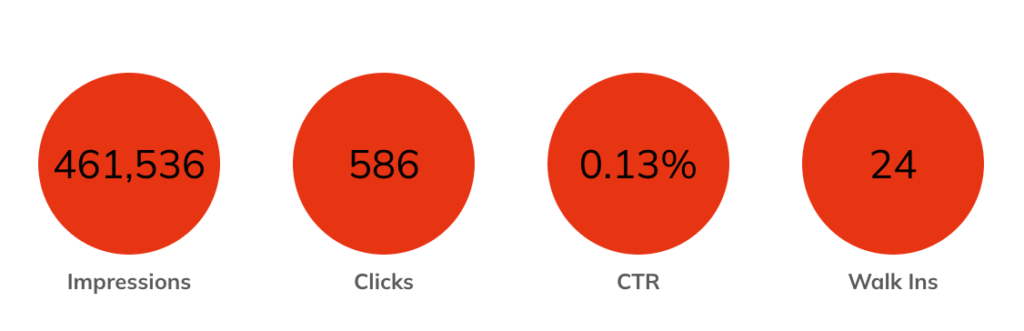
In addition to the Google Ads campaign they were running and the increased lead flow they got after we launched programmatic display display campaign, we continued with our programmatic strategy, achieve a click through rate above average at 0.13%, but more importantly, driving 580 clicks and 24 conversions/leads to the hvac repair comapny.  They continue to deploy a holistic marketing strategy to ensure they’re expanding their top of funnel reach, middle of funnel intent, and lower funnel lead flow to the firm.

Thanks for contacting us! We will get in touch with you shortly.

Download PDF

Thanks for contacting us! We will get in touch with you shortly.

Download PDF

Thanks for contacting us! We will get in touch with you shortly.

Download PDF

Thanks for contacting us! We will get in touch with you shortly.

Download PDF

Thanks for contacting us! We will get in touch with you shortly.

Download PDF

Thanks for contacting us! We will get in touch with you shortly.

Download PDF

Thanks for contacting us! We will get in touch with you shortly.

Download PDF

Thanks for contacting us! We will get in touch with you shortly.

Download PDF