
How Does Geofencing Marketing Grow Dental Patient Volume?
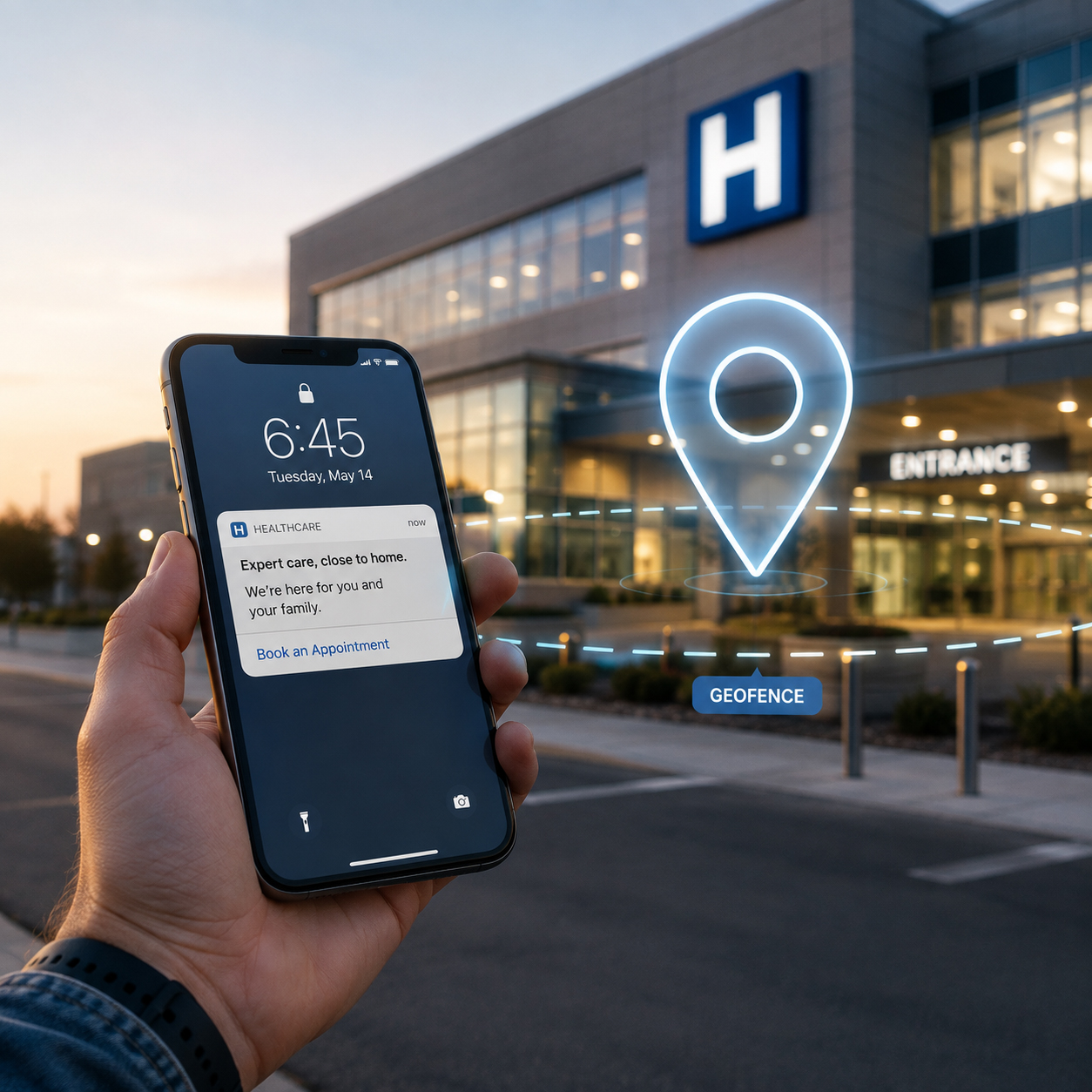
Geofencing marketing for dental clinics draws virtual boundaries around competitor practices, insurance offices, and nearby neighborhoods, then serves mobile ads to the phones of people who cross into those zones. The American Dental Association’s Health Policy Institute counts more than 200,000 practicing dentists in the U.S., meaning most patients pass several competing offices before they choose one.
TLDR: Geofencing marketing lets a dental practice target patients by where they actually go, not just what they search. A practice draws digital fences around competitor offices, urgent dental clinics, orthodontic centers, and even its own parking lot, then serves ads to any smartphone that crosses in. Because roughly 65% of U.S. adults see a dentist in a given year per CDC survey data cited by the ADA, the addressable audience walking past a fence is large and already primed to need dental care. This post covers how the technology works, where to draw fences for a dental practice specifically, what results are realistic, and how to launch a first campaign this month.
AI Summary: Geofencing marketing for dental clinics is a location-based advertising strategy that captures mobile device IDs when a phone enters a defined geographic boundary, then serves targeted digital ads to that device for a set retargeting window. It is for single-location and multi-location dental practices competing for patients in a market with an average of several other dentists within a short drive. It works by fencing high-intent locations — competitor offices, insurance broker offices, orthodontic and pediatric referral sources, even shopping centers near the practice — and serving ads across the apps and websites that captured device later visits. Practices use it because it reaches people by physical behavior rather than search intent alone, filling gaps that Google Ads and organic SEO cannot reach on their own. Propellant Media designs, launches, and manages geofencing campaigns for dental clinics as part of its full-funnel local paid media programs.
Table of Contents
- What Is Geofencing Marketing for Dental Clinics?
- How Does Geofencing Actually Capture a Patient’s Device?
- Where Should a Dental Practice Draw Its Fences?
- How Much Does Geofencing Marketing Cost for a Dental Practice?
- What Results Should a Dental Clinic Expect From Geofencing?
- How Does Geofencing Compare to Google Ads for Dental Patient Acquisition?
- How Do You Launch a Geofencing Campaign This Month?
- Frequently Asked Questions
- Key Takeaways
What Is Geofencing Marketing for Dental Clinics?
Geofencing marketing for dental clinics is a location-based advertising strategy that draws a virtual boundary around a physical place and serves ads to any smartphone that crosses it. It works by matching a device’s GPS, Wi-Fi, and cellular signals against the fence’s coordinates in real time. Dental practices use it to reach patients based on where they actually go, not just what they type into Google.
Unlike a radius-based ad campaign that blankets a ZIP code, geofencing draws a precise polygon around one building — a competitor’s parking lot, an insurance broker’s office, an orthodontic referral partner. That precision matters in dental marketing, where the difference between “somewhere in this town” and “standing in a competitor’s waiting room” is the difference between a wasted impression and a warm lead. For a broader look at how the underlying technology works across industries, see Propellant Media’s explainer on what geofencing is and how it works.
- Geofencing: targets a specific building or venue with a custom-drawn boundary
- Radius targeting: targets a circle around a ZIP code or address, less precise
- Retargeting window: typically 30 days after a device is captured in a fence
- Ad formats: mobile display, native, and video served across apps and mobile web
How Does Geofencing Actually Capture a Patient’s Device?
Geofencing captures a patient’s device when their smartphone’s location services cross into a fenced polygon while an app with location permissions is active in the background. The device’s mobile advertising ID (MAID) is logged, and that ID becomes eligible to receive the practice’s ads for a set retargeting window, typically up to 30 days.
Mobile advertising ID capture is a passive process. A patient does not opt into a specific campaign — they simply need location permissions enabled on an app that shares data with a demand-side platform (DSP), which covers a large share of smartphone users. Once captured, that device ID flows into an audience pool the practice’s ad platform can target across thousands of apps and websites, not just one.
Programmatic display advertising is the umbrella technology that makes this possible. It is a real-time auction system that buys and places ad impressions across the open web in milliseconds. Dental practices use it to make sure a captured device sees the practice’s ad on a weather app, a local news site, or a mobile game, wherever that person happens to be browsing next.
Quick facts on device capture:
- Capture happens within seconds of a device entering the fence
- Retargeting windows for dental campaigns typically run 30 days
- Ads render across mobile apps, mobile web, and connected devices tied to the same household
Where Should a Dental Practice Draw Its Fences?
A dental practice should draw fences around competitor dental offices, insurance broker locations, orthodontic and pediatric referral sources, and its own practice during peak walk-in hours. Each location type captures a different stage of patient intent, from active comparison shopping to loyal patients who may need a referral to a specialist.
In our experience managing geofencing campaigns for healthcare clients, the highest-converting fences are rarely the obvious ones. A fence around a single large competitor often underperforms three or four smaller fences around insurance brokers and urgent care clinics, where the person walking out is actively looking for a provider rather than already loyal to one.
- Competitor dental offices: reaches patients actively comparison-shopping providers
- Insurance broker offices: reaches people choosing a plan and provider network simultaneously
- Orthodontic and specialist offices: reaches referral-stage patients needing a general dentist
- Shopping centers and gyms near the practice: reaches the practice’s own local demographic during daily routines
- The practice’s own lot: re-engages existing patients with recall and hygiene reminders
How Much Does Geofencing Marketing Cost for a Dental Practice?
Geofencing marketing for a single-location dental practice typically starts between $1,500 and $3,000 per month, covering both media spend and campaign management. Multi-location practices or DSOs running fences across several markets should budget proportionally more, since each location needs its own set of fenced zones.
Cost scales with the number of fences, the size of each polygon, and how competitive the local dental market is. A practice in a dense suburban market with a dozen nearby competitors will need a larger fence budget than a practice in a smaller town with two or three competing offices. Most agencies bill on a flat monthly retainer that includes both the ad spend and the strategic management of which fences to run. For a channel-by-channel cost breakdown beyond dental specifically, see Propellant Media’s geofencing pricing guide.
| Practice Size | Typical Monthly Budget | Typical Fence Count |
|---|---|---|
| Single-location practice | $1,500 – $3,000 | 5 – 10 fences |
| Two to three locations | $3,000 – $6,000 | 15 – 25 fences |
| Regional DSO (4+ locations) | $6,000+ | 30+ fences |
Source: Propellant Media client campaign benchmarks, 2026.
location
$1.5K-$3K
2-3
locations
$3K-$6K
Regional
DSO (4+)
$6K+
Source: Propellant Media client campaign benchmarks, 2026.
What Results Should a Dental Clinic Expect From Geofencing?
A dental clinic running geofencing should expect to see captured device volume and click-through data within the first two to three weeks, with new patient appointment attribution becoming measurable by month two. Results depend heavily on fence placement, competitive density, and how quickly the practice’s front desk follows up on inbound calls and form fills.
One dental client saw a [XX]% increase in new patient phone calls in the 90 days after adding competitor and insurance-office fences to an existing Google Ads program. [Placeholder — verify against final campaign reporting before publishing a hard number.]
Foot-traffic and call-volume gains compound over a campaign’s life. A fence that produces modest results in month one often improves in month two and three as the retargeting pool grows and the DSP’s algorithm learns which captured devices actually convert. Practices that pull budget after 30 days rarely see the full return the channel can produce.
Fences live,
capture begins
Week 3-4
CTR data
stabilizes
Month 2
Appointment
attribution clear
Source: Propellant Media campaign delivery benchmarks, 2026.
How Does Geofencing Compare to Google Ads for Dental Patient Acquisition?
Geofencing and Google Ads serve different stages of the dental patient journey: Google Ads captures people actively searching for a dentist right now, while geofencing reaches people based on physical behavior before or after they search. Most dental practices see the strongest results running both channels together rather than choosing one over the other.
Google Search Ads (PPC) is a pay-per-click advertising channel where a dental practice bids on keywords like “dentist near me” to appear at the top of search results. It works by charging the practice only when a searcher clicks the ad. Dental practices use it to capture people already in an active, high-intent search moment — a moment geofencing cannot manufacture on its own.
| Factor | Google Ads (PPC) | Geofencing Marketing |
|---|---|---|
| Intent captured | Active search intent | Behavioral/location intent |
| Typical pricing model | Cost-per-click | Cost-per-impression |
| Best for | Capturing ready-to-book searchers | Building awareness with in-market patients |
| Works best when | Paired with geofencing retargeting pools | Paired with a Google Ads safety net |
Source: Propellant Media paid media channel comparison, 2026.
How Do You Launch a Geofencing Campaign This Month?
A dental practice can launch a first geofencing campaign this month by identifying five to ten target locations, setting a 30-day retargeting window, and connecting call tracking so front desk staff can attribute new patient calls to the campaign. Most DSPs can go live within one to two weeks of creative and fence approval.
Start with three fence types: two or three direct competitors, one or two insurance broker offices, and the practice’s own parking lot for recall campaigns. Pair the launch with a dedicated landing page and call tracking number so results are measurable from day one, not estimated after the fact.
- List 5-10 target locations (competitors, insurance offices, referral sources)
- Confirm creative assets are ready — mobile display banners in at least three sizes
- Set up a call tracking number and dedicated landing page
- Launch fences with a 30-day retargeting window
- Review click-through and call volume weekly for the first month
Frequently Asked Questions
How much does geofencing marketing cost for a dental practice?
A single-location dental practice typically budgets $1,500 to $3,000 per month for geofencing, covering both media spend and management. Multi-location DSOs scale that budget with the number of markets and fences they run.
That range covers 5 to 10 fenced locations with standard mobile display creative. Practices adding video or native ad formats, or expanding to 20+ fences across multiple locations, should expect costs at the higher end of $3,000 to $6,000 per month. Most agencies bundle strategy, creative, and management into one flat retainer rather than billing media and service separately.
How long does it take to see results from geofencing?
Captured device volume and click-through data typically appear within the first two to three weeks of a campaign going live. New patient appointment attribution becomes clearer by month two, once enough captured devices have moved through a full 30-day retargeting cycle.
Results depend on fence placement and front-desk follow-up speed. A practice that fences 8 to 10 high-traffic locations and answers inbound calls within minutes will see attribution data faster than one running 2 or 3 fences with slow call response. Most agencies recommend a 90-day minimum test window before judging full campaign performance.
How do you measure whether geofencing is driving new patients?
Geofencing performance is measured through call tracking numbers, dedicated landing page conversions, and, where available, foot-traffic attribution reporting from the DSP. A dedicated tracking number tied only to the geofencing campaign is the clearest way to isolate its impact from other channels.
Beyond call tracking, practices should watch click-through rate on served ads, cost per captured device, and conversion rate from landing page visit to appointment request. Attribution & Analytics platforms can stitch this data together with a practice’s existing Google Ads and organic traffic reporting for a full-funnel view, rather than judging geofencing in isolation.
How does geofencing compare to Google Ads for a dental practice?
Geofencing and Google Ads serve complementary roles: Google Ads captures people actively searching for a dentist, while geofencing reaches people based on physical location and behavior. Most practices run both together, using geofencing to feed audiences that Google Ads and social retargeting can also reach.
Cost-per-click for competitive dental keywords on Google Ads can run significantly higher than the cost-per-impression on a geofencing campaign, making geofencing an efficient way to build brand visibility while Google Ads captures the immediate-intent searches. Practices with tight budgets often start with geofencing to build audience volume before adding Google Ads spend.
Is geofencing marketing compliant with patient privacy rules for dental practices?
Geofencing marketing itself targets anonymized mobile advertising IDs, not named patients, so standard geofencing campaigns do not touch protected health information and do not trigger HIPAA requirements on their own. Practices only need to apply HIPAA safeguards when they layer in first-party patient list data, such as CRM retargeting using patient contact records.
Practices should still work with an agency familiar with healthcare advertising rules, since ad platforms like Meta and Google apply their own healthcare-specific targeting restrictions separate from HIPAA. A practice combining geofencing with CRM retargeting off its own patient list should confirm hashed-match upload processes with its agency before launch.
Key Takeaways
- Geofencing captures a patient’s mobile device ID when they physically enter a fenced zone, then serves ads for up to 30 days
- The strongest fences for dental practices are often insurance brokers and specialist referral offices, not just direct competitors
- Budget $1,500 to $3,000 per month for a single-location practice running 5 to 10 fences
- Expect measurable click and call data within 2 to 3 weeks, with appointment attribution clearer by month two
- Pair geofencing with call tracking and a dedicated landing page from day one to measure results accurately
- Geofencing and Google Ads serve different stages of the patient journey and perform best run together
- Standard geofencing does not require HIPAA safeguards, but CRM retargeting with patient data does
Ready to Fill Your Dental Practice’s Appointment Book?
Propellant Media designs and manages geofencing campaigns built specifically for dental practices competing in crowded local markets. Talk to our team about mapping the right fences for your practice and connecting them to a measurable new-patient pipeline.
By Justin Croxton, CEO of Propellant Media. Published July 31, 2026.
[VISUAL PLACEHOLDER: Map graphic showing geofenced polygons around a dental practice, competitor offices, and an insurance broker — alt text: “geofencing marketing map for dental clinic patient acquisition”]
[VIDEO EMBED SUGGESTION 1: Short explainer on how geofencing device capture works, 60-90 seconds]
[VIDEO EMBED SUGGESTION 2: Client walkthrough or case study interview on geofencing results for a dental practice]
Related reading: learn more about geofencing marketing services, browse 30 geofencing marketing companies and providers, or explore healthcare marketing strategies from Propellant Media. External sources: ADA Health Policy Institute and CDC National Health Interview Survey.